A 2026 survey of 13,825 people in care at one provider found that 53% waited over a year before their first professional session. Why the delay matters, a caution on one headline figure, and what families can do.
In this article 9
In one line
If you have been feeling persistently anxious, low or overwhelmed, do not wait for it to pass on its own. Speaking to a doctor early, or to someone you trust, shortens the road to help.
Content note
This page refers to thoughts of self-harm reported in a survey. If you are having such thoughts now, please contact someone immediately. Tele-MANAS 14416 (free, 24×7). Emergency 112.
The story in brief
A survey released this week by Amaha, a mental healthcare provider with centres in Bengaluru, Mumbai and Delhi, found that people with mental health concerns often wait a long time before getting professional help.14 More than half of the 13,825 respondents said they had waited over a year, and only 11.3% reached care within a month. Most first turned to friends or family, and many tried self-help first.
Why the delay matters
A long gap between the first symptoms and the first professional contact is one of the most consistent findings in mental health care. Early in an illness, symptoms are usually milder, more responsive to treatment, and easier to separate from ordinary stress. When help arrives after a year, the same person often has several problems at once. In this report, 94.9% of respondents named two or more concerns, most often anxiety, stress and low mood.3
The report also suggests that people are not doing nothing while they wait. Over half turned first to friends or family, and 44.6% tried self-help. Those are not failures. They are the first steps of a journey, and they show where families and communities can be enlisted early, before a problem becomes a crisis.
A caution on one headline figure
Several outlets reported that "72% of students" seeking care had thoughts of self-harm.2 The published figure is different. Among respondents who reported thoughts of self-harm, about 72% were students. That is a share of one group, not a share of all students, and the report itself notes that it describes people who had already sought care at one provider. It cannot tell us how common self-harm thoughts are among students in India.
Read this way, the study is most useful as a picture of the people who reached a specialist service, and of how long they travelled to get there.
The clinical perspective
Three points matter for families and for clinics like ours.
- 1Early signs are worth learning
Changes in sleep, withdrawal from usual activities, irritability and a drop in functioning are often noticed by family first. A family that knows what to look for can bring someone in weeks rather than years later.
- 2Primary doctors are a real route in
Many people first describe their distress as tiredness, headaches or stomach upset. A family physician who asks about mood and sleep can start the process, with a referral when needed.
- 3Thoughts of self-harm are a reason to act now, not later
Anyone who reports them should be asked directly about safety and connected to help the same day. Waiting a year is not a neutral option when those thoughts are present.
Evidence grade
| Item | What the source states |
|---|---|
| Study type | Descriptive survey of people already in care at one provider (Amaha), responses collected before their first session |
| Sample | 13,825 people, October 2025 to September 2026, centres in Bengaluru, Mumbai and Delhi |
| Representativeness | Not representative of India. Respondents had already accessed professional help. The report does not estimate prevalence. |
| Key figures (as reported) | 53% waited over a year; 11.3% reached care within a month; 56.2% reported thoughts of self-harm before care; 71.7% of those with such thoughts were students; 94.9% had two or more concerns |
| Peer review | Not known to be peer-reviewed. Released by the provider. |
| Conflict of interest | The report is produced by a commercial mental healthcare provider that offers the services the report describes. |
| Source of figures | Figures are taken from PTI coverage and two further news reports, which agree on the main numbers. The primary report was not reviewed directly for this commentary. |
Limits
The people surveyed had already chosen a private provider, so their experience of delay may differ from that of people who never sought help, or who used public services. Responses are self-reported, the survey has no comparison group, and the report cannot show why the delay happened. Students and young adults are over-represented, partly because of who uses the service. The findings should be read as a signal for better access, not as a measure of national need.
Frequently Asked Questions
Why do people wait so long to get help for mental health concerns?
Common reasons include uncertainty about whether the problem is "serious enough", stigma, cost, distance from services, and not knowing where to start. This survey does not measure these reasons directly, so they should be treated as likely contributors, not as proven causes.
Is it harmful to wait a few months before seeing a doctor?
A short wait is usually not dangerous, but persistent symptoms that affect sleep, work, study or relationships for several weeks are a good reason to see a doctor. If there are thoughts of self-harm, do not wait; seek help the same day.
Where should I start if I am not sure what I need?
A family physician or a psychiatrist can assess and advise. If you are unsure, begin with a primary doctor and ask for a referral if needed.
How can I help a family member who is struggling but refuses help?
Start by listening without judgement, ask directly about safety, and suggest one small step, such as a visit to a doctor for a check-up. Involving a trusted relative or friend can help.
Is 72% of students with mental health problems a national figure?
No. The figure refers to students among respondents who reported thoughts of self-harm, within a sample of people already in care at one provider.
Does this report show that mental health care is improving or worsening in India?
No. It is a single snapshot from one provider over one year, with no comparison period.
References
The sources named in the text, in order of first mention.
- PTI. "Mental health survey underlines hesitation in seeking help; 53 pc waited for over a year." ThePrint, 14 October 2026. theprint.in
- Business Standard. "72% of students seeking mental healthcare report self-harm thoughts: Amaha." 13 October 2026. business-standard.com
- Deccan Chronicle. "Mental health survey highlights hesitation, 53 pc waited over a year." October 2026. deccanchronicle.com
- Amaha. Mental Health Report 2026: Understanding the Journey to Care in India. (Primary report; not reviewed directly for this commentary.)
About this article
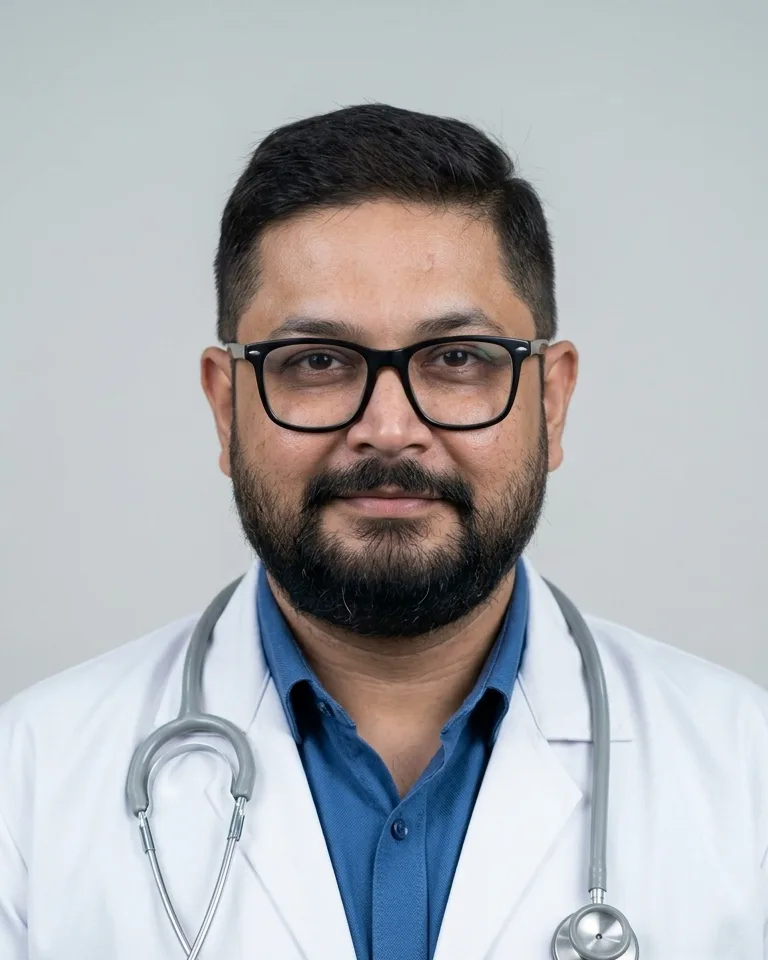
Written and medically reviewed by
- MD (Psychiatry) AIIMS New Delhi
- Associate Professor & HOD, Dept. of Psychiatry, RDJM Medical College, Muzaffarpur
- Ex-Assistant Professor, PMCH Patna
- Consultant, Healthy Minds India, Patna
- Written
- 14 October 2026
- Format
- News commentary
- Evidence
- Descriptive survey from one provider, figures as reported in news coverage
- Sources
- 4 references
- Transparency: this article was prepared with AI assistance and reviewed and signed off by Dr. Saurabh Kumar.
© 2026 Healthy Minds India, Patna · News commentary, October 2026
Disclaimer
This article is for educational purposes and general awareness only. It is not medical advice, does not create a doctor-patient relationship and should not be used to diagnose or treat any condition. Please consult a qualified professional for advice specific to your situation, and do not start, stop or change any medication without speaking to your doctor.
If you need help now
Tele-MANAS (free, 24×7): 14416 or 1-800-891-4416 · Emergency: 112 · Children: Childline 1098 · Women facing violence: 181 · De-addiction: 14446
Related guides
Healthy Minds India, Patna
House No. 46/B, Sahdeo Mahto Marg, Near Sri Krishna Puri Park (Children's Park), Patna 800001
In person in Patna, online across India · Mon-Wed, Fri & Sun, 9 AM-7 PM (Thu & Sat closed)
Appointments
Non-emergency: +91 8709299986 / 9060484416 · book a consultation
Services: Psychiatric consultation for adults, young people and families · Student mental health · Online consultation across India
Medically reviewed by Dr. Saurabh Kumar, Consultant Neuropsychiatrist, Healthy Minds India, Patna. This article is for general education and is not a substitute for a personal consultation. To discuss your situation, book an appointment or contact the clinic.