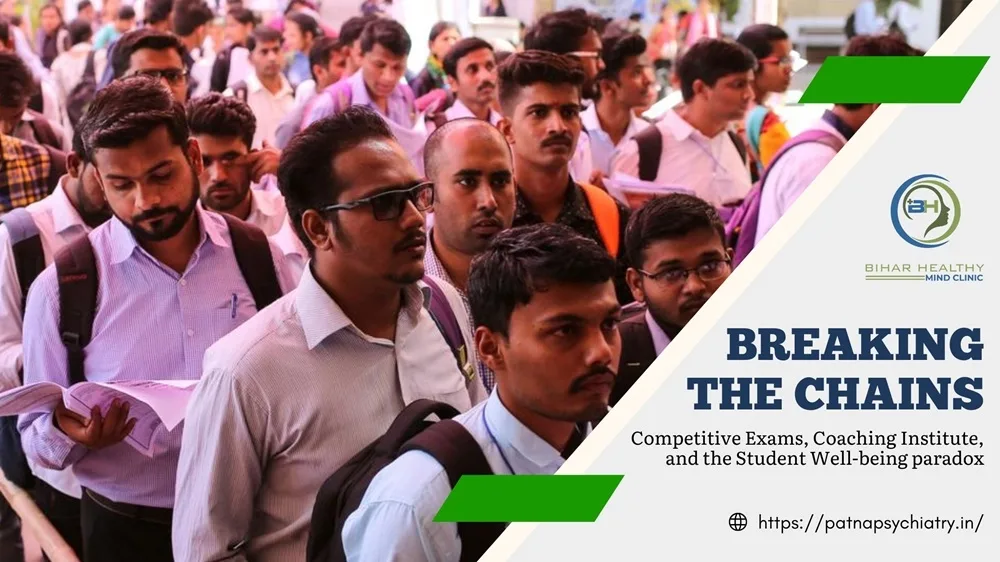
Explore the impact of competitive exams on student well-being, the coaching industry's role, and the need for a balanced educational approach. Discover actionable solutions for a kinder, student-centered system.
In this article 26
- Historical Roots: How Exams Became the Be-All and End-All
- From Gateways to Gatekeepers
- The Rise of Coaching Cities
- The Coaching Industry: When Education Becomes an Enterprise
- The Economics of Aspiration
- Case Study: Ravi’s Struggle
- Dubious Practices
- Pressure to Perform: A Student’s Daily Battle
- Life in the Pressure Cooker
- Case Study: Meera’s Journey
- Mental Health: The Hidden Casualty
- An Epidemic of Anxiety
- Psychological Triggers
- Case Study: Rohan’s Collapse
- Physical Health: The Overlooked Dimension
- The Cost of Neglect
- Case Study: Kavya’s Wake-Up Call
- The Role of Parents: Supporters or Enforcers?
- Balancing Aspirations and Realities
- Practical Challenges
- Case Study: Aarti’s Conflict
- Rethinking Success: A Broader Perspective
- Breaking the Monotony
- Case Study: Siddharth’s Discovery
- An Innovative Well-Being Program for Coaching Institutes
- Conclusion: Toward a Kinder Educational System
Competitive exams are seen as the great equalizer in societies that prize meritocracy, offering access to premier institutions and lucrative careers. Yet, beneath this glittering promise lies a web of challenges that are often underestimated: the relentless pressure on students, the exploitative nature of the coaching industry, and the toll on physical and mental health.
This blog explores the nuanced interplay between the pursuit of academic success, the coaching ecosystem, and the need for a student-centered well-being approach. Drawing on real-life stories and backed by evidence, we propose actionable steps for a sustainable educational paradigm.
Historical Roots: How Exams Became the Be-All and End-All
From Gateways to Gatekeepers
The evolution of competitive exams can be traced back to colonial India, where civil services exams were designed to select administrators. Over the decades, these tests became synonymous with opportunity. However, as opportunities narrowed and competition intensified, the focus shifted from learning to ranking.
The Rise of Coaching Cities
Kota, Rajasthan, exemplifies this transformation. Dubbed the "Coaching Capital of India," Kota attracts over 150,000 students annually. The city’s economy revolves around a billion-dollar coaching industry. But Kota also bears the scars of its success: student suicides have become alarmingly frequent, with reports indicating that over 30 students die by suicide annually in this small city.
The Coaching Industry: When Education Becomes an Enterprise
The Economics of Aspiration
Coaching institutes generate billions globally, driven by the promise of turning dreams into reality. However, the high costs often create disparities, with wealthier students enjoying better access to resources. This exacerbates existing inequalities, undermining the meritocratic ideals competitive exams were meant to uphold.
Case Study: Ravi’s Struggle
Ravi, a student from a low-income family in Bihar, secured admission to a prestigious coaching center through a scholarship. However, the hidden costs-accommodation, study materials, and constant assessments-strained his family’s finances. Despite his determination, Ravi felt isolated among peers who could afford additional resources.
Dubious Practices
Some coaching centers focus more on institutional branding than student success. For instance:
- Poaching top scorers from competitors.
- Manipulating results to inflate success rates.
- Overloading students with irrelevant material to justify exorbitant fees.
Pressure to Perform: A Student’s Daily Battle
Life in the Pressure Cooker
A student preparing for NEET or JEE might start their day at 5 AM and end it past midnight. Their schedules are packed with lectures, assignments, and practice tests. Weekends, instead of offering respite, are consumed by additional classes or mock exams.
Case Study: Meera’s Journey
Meera, a 16-year-old aspiring doctor, moved to Kota with dreams of cracking NEET. Her initial excitement soon gave way to chronic stress. Between balancing a 12-hour study schedule and managing loneliness, Meera developed insomnia and frequent headaches. The coaching institute provided little emotional support, leaving her to navigate her struggles alone.
Mental Health: The Hidden Casualty
An Epidemic of Anxiety
Research shows that nearly 50% of students preparing for competitive exams experience severe stress, while 30% report symptoms of depression. The fear of failure is compounded by societal expectations and self-imposed pressures.
Psychological Triggers
- Parental Expectations: Parents often equate academic success with family honor.
- Peer Comparisons: Social media amplifies the visibility of peers’ successes, intensifying feelings of inadequacy.
- Uncertainty: The high-stakes nature of exams leaves little room for second chances.
Case Study: Rohan’s Collapse
Rohan, a bright student from Delhi, developed panic attacks during his second year of JEE preparation. Despite being a top performer, the constant scrutiny and fear of losing his rank left him emotionally exhausted. A breakdown during a mock test led his parents to seek professional help, where he was diagnosed with severe anxiety disorder.
Physical Health: The Overlooked Dimension
The Cost of Neglect
Competitive exam preparation often sidelines physical well-being. Common issues include:
- Sleep Deprivation: Many students average less than 5 hours of sleep per night.
- Poor Diet: Junk food and irregular meals become staples in the absence of home-cooked nutrition.
- Lack of Exercise: Sedentary lifestyles result in weight gain and reduced stamina.
Case Study: Kavya’s Wake-Up Call
Kavya, an 18-year-old engineering aspirant, ignored her frequent Migraines and back pain, dismissing them as minor issues. By the time she completed her coaching program, she was diagnosed with early signs of chronic fatigue syndrome.
The Role of Parents: Supporters or Enforcers?
Balancing Aspirations and Realities
Parents often view competitive exams as a pathway to stability and social mobility. However, their well-meaning intentions can become a source of pressure.
Practical Challenges
- Financial Burdens: Coaching fees, often upwards of ?200,000 annually, represent a significant investment for middle-class families.
- Emotional Disconnect: Many parents fail to recognize the emotional toll these pressures exert on their children.
Case Study: Aarti’s Conflict
Aarti’s parents wanted her to become an IAS officer, despite her interest in literature. The disconnect led to constant arguments, and Aarti felt trapped between familial expectations and her dreams. Ultimately, she dropped out of her coaching center, leaving behind emotional scars.
Rethinking Success: A Broader Perspective
Breaking the Monotony
Success needs to be redefined to include diverse career paths:
- Vocational training.
- Creative pursuits.
- Entrepreneurial endeavors.
Case Study: Siddharth’s Discovery
Siddharth, once a JEE aspirant, struggled with academics but excelled in design. Pivoting to a career in UX/UI design allowed him to thrive, proving that there is life beyond traditional definitions of success.
An Innovative Well-Being Program for Coaching Institutes
To address the challenges discussed, coaching institutes can adopt a comprehensive well-being framework:
-
- Mental Health First Aid
- Employ qualified counselors to provide one-on-one sessions.
- Conduct workshops on resilience, mindfulness, and time management.
- Physical Wellness Programs
- Mandate daily fitness sessions.
- Partner with local vendors to provide nutritious meals.
- Balanced Timetables
- Include leisure periods for hobbies and recreational activities.
- Reduce excessive testing to minimize burnout.
- Parent Engagement
- Host monthly meetings to discuss students’ emotional and academic progress.
- Provide workshops on supporting children effectively.
- Career Counseling
- Offer aptitude-based guidance to explore non-traditional career paths.
- Celebrate achievements beyond academic performance.
Conclusion: Toward a Kinder Educational System
The culture of relentless achievement must give way to a more compassionate and balanced approach. By embracing holistic development and redefining success, we can ensure that students emerge not just as professionals but as well-rounded individuals.
TAGS: Competitive Exams, Coaching institutes, The Coaching Industry, Academic-Success, Coaching Ecosystem, Be-All and End-All, Life in the Pressure Cooker, An Epidemic of Anxiety, civil services, Psychological Triggers, Coaching Capital of India, coaching industry, Student Suicides, NEET, Emotional Disconnect, JEE, Depression, Career Counseling, Parental Expectations, Panic Attacks, Severe Anxiety Disorder,Sleep Deprivation, Migraines, Chronic Fatigue Syndrome, IAS officer
Disclaimer: All characters and events depicted in this blog are entirely fictional. Any resemblance to actual persons, living or dead, is purely coincidental. The content is intended for informational purposes only and should not be considered as medical advice. Always consult a qualified healthcare professional for medical concerns.
Related reading from The Student Mind on competitive exams and coaching: exam stress, the dropper year, the parents' guide to entrance exams and the waiting years.
Medically reviewed by Dr. Saurabh Kumar, Consultant Neuropsychiatrist, Healthy Minds India, Patna. This article is for general education and is not a substitute for a personal consultation. To discuss your situation, book an appointment or contact the clinic.
Disclaimer: all characters and events depicted in this blog are entirely fictional. Any resemblance to actual persons, living or dead, is purely coincidental. The content is intended for informational purposes only and should not be considered medical advice. Always consult a qualified healthcare professional for medical concerns.