An honest look at the lodge years, the near-miss, the age-limit clock, and a two-track plan that respects the dream without betting your whole life on it.
In this article 17
- First, let us respect the dream
- The arithmetic nobody writes on the lodge wall
- What the waiting costs
- Why it is so hard to stop
- The sunk cost
- The near-miss
- The shame of returning
- A better plan: two tracks, one life
- 1. Decide the limit before you begin, not after you fail
- 2. Build a second track alongside the first
- 3. Keep one foot in the world
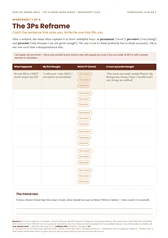
- Worksheet 3: My Two-Track Pact
- When the waiting turns into illness
- Vikas, one year later
- Frequently Asked Questions
- References
- About this article
Part of The Student Mind, our guide to sarkari naukri preparation for students, parents and teachers across India.
Walk through the lanes behind Musallahpur Hatt or Bhikhna Pahari in Patna at six in the morning and you will hear it before you see it: the murmur of thousands of young men and women reading aloud (current affairs, the Constitution, reasoning shortcuts) in rooms of eight by ten feet, with a bucket, a bed and a photograph of their parents on the wall. Every one of them is waiting for a notification. Many have been waiting for years.
I have walked these lanes many times, and I have enormous respect for what happens in those rooms. But I also see, in my clinic, what happens when the waiting does not end. This article is for those young people, and for the families in Gaya, Ara, Darbhanga and Saharsa who send them money every month and pray.
From the clinic · a composite example · not a real person
Vikas is twenty-nine. He finished his BA in Ara and came to Patna "for one year" to prepare for BPSC and SSC. That was six years ago. His father, a small farmer, sends him money every month. Vikas has cleared two prelims and missed one mains by four marks. He came to me because he could not sleep and had begun to dread phone calls from home. "Doctor sahab," he said, "if I go back now, what was all this for?"
Composite illustration for education only; no resemblance to any real individual.
01 · The dream
First, let us respect the dream
I will not mock the sarkari naukri, and neither should you. In a state where private-sector jobs have long been scarce and insecure, a government post offers real things: a regular salary, a pension, medical cover, protection from sudden dismissal, and a respect in the village and the marriage market that few private jobs can match. For a family that has never had a salaried member, it can change the fortunes of a generation. The dream is rational. The problem is not the dream. The problem is the arithmetic, and what the waiting does to the mind.
02 · The arithmetic
The arithmetic nobody writes on the lodge wall
In Bihar's 2023 police constable recruitment, nearly twelve lakh candidates sat the written exam for 21,391 posts, roughly fifty-six candidates for every post.1 For many state civil-service and SSC posts, the ratio is far steeper. Kunal Mangal, an economist who has studied these exams closely, found that in Tamil Nadu more than three hundred candidates applied for every vacancy advertised through the state public service commission, and that around a lakh young people across the state stayed out of work to study full-time.2
Those odds mean that for every person who succeeds, many more who are just as hardworking and just as intelligent will not. Not because they failed as people, but because there are not enough chairs.
03 · The evidence
What the waiting costs
Mangal's most important study looked at what happened when Tamil Nadu froze most government hiring between 2001 and 2006. Vacancies fell by 86 per cent, yet applications did not fall; young men simply waited longer and prepared harder. A decade after the freeze ended, those same men were earning less, had married and set up homes later, and were more likely to still be unemployed. Their parents had delayed retirement to support them.3 The years spent preparing had not been converted into skills the rest of the economy valued.
The psychological costs are just as real. In the 1930s, the social psychologist Marie Jahoda studied an Austrian village where the only factory had closed. She later argued that a job gives us far more than money: it structures our day, connects us to people, gives us a shared purpose, a status, and regular activity.4 A lodge room provides almost none of these. A large meta-analysis by Karsten Paul and Klaus Moser, covering hundreds of studies, found that about one in three unemployed people had psychological problems such as depression and anxiety, roughly twice the rate among those in work.5
What a job gives you
What the lodge years give you
Time structure, a day with a shape
Days that blur into one another
Social contact, colleagues, friends
Friends who are also rivals
Shared purpose, work that matters
A purpose that is always "next year"
Status, an answer to "what do you do?"
"Still preparing" at every wedding
Activity, body and mind in use
Twelve hours at one desk
04 · Why it is so hard to stop
Why it is so hard to stop
If the odds are so steep, why do so many bright young people keep going for six, eight, ten years? Not because they are foolish. Because they are human, and three well-studied forces are pulling them.
The sunk cost
In a classic set of experiments, Hal Arkes and Catherine Blumer showed that people keep investing in a failing course of action precisely because they have already invested so much.6 "If I stop now, the last six years were wasted" feels like logic. It is actually the past holding the future hostage. Barry Staw found that people who feel personally responsible for an earlier decision are the most likely to escalate their commitment to it.7
The near-miss
"Four marks short." Few sentences are more powerful. Brain-imaging research on gambling found that near-misses activate the same reward circuits as actual wins and increase the urge to play again, even though a near-miss is, objectively, a loss.8 A cut-off missed by a whisker feels like proof that success is one attempt away. Sometimes it is. But the brain cannot tell the difference between a genuine signal and a cruel coincidence.
The shame of returning
Going back to the village without the job feels like public failure, to parents who sold land, to relatives who ask at every wedding. So the student stays, not because the plan is working, but because the alternative feels unbearable.
- Miss by 4 marks
- "So close, one more"
- Another year in
- "Can't waste it now"
The waiting loop
The question is not whether the government job is worth wanting. It is whether you are willing to bet every year of your twenties on a single door.
05 · A better plan
A better plan: two tracks, one life
I do not tell young people to give up their dream. I tell them to stop gambling everything on it. Mangal's own recommendation to policymakers was to make exam preparation produce skills that are valuable even to those who are not selected.3 Individuals can do the same for themselves. Here is the framework I use with patients like Vikas.
1. Decide the limit before you begin, not after you fail
Write down, now, how many attempts or years you will give this, and what score in the mock tests would tell you that you are genuinely close. Decisions made in advance are far more likely to be kept under pressure than decisions made in the moment.9 Seeing that limit honoured is not defeat; letting go of an unreachable goal and committing to a new one is consistently linked with better wellbeing.10
2. Build a second track alongside the first
Spend two or three hours a day on a skill that pays: accounts and Tally with GST, spoken English and computer basics, teaching and tutoring (which uses everything you have studied), digital marketing, a trade course from an ITI, or a recognised Skill India course. This is not a distraction from preparation. It restores the structure, contact and purpose that the lodge takes away, and it is your safety net.
3. Keep one foot in the world
Leave the room every day. Play cricket on Sunday. Visit home without waiting for a result. Isolation is not dedication; it is a risk factor.
My two-track pact
Track 1: the exam
- My goal
- Attempts or years I will give
- Mock score that means "I am close"
Track 2: the skill that pays
- My second-track skill
- Hours per day on it
- Review date with my family
Free download · The Student Mind Kit
Worksheet 3: My Two-Track Pact
For anyone preparing for a competitive or government exam. Decide your limits before you start, build a second track alongside the first, check whether you still have the five things a job gives you, and set checkpoint dates with a family member. Worksheet 3 of the Student Worksheet Pack.
Student Worksheet Pack (4 worksheets)
Print Worksheet 3 and fill it in with a parent, teacher or counsellor.
Download PDF ↓Free to print and share for personal and educational use. More tools: The Student Mind Kit.
Dr. Saurabh's note to parents
Your son or daughter may be staying in Patna because they cannot face disappointing you. Tell them, in plain words, that coming home with a skill and a job is not failure, and that your respect does not depend on a government letter. You may be the only person who can give them permission to stop.
06 · When the waiting turns into illness
When the waiting turns into illness
Long preparation is a common setting for depression, anxiety and, sometimes, dependence on tobacco, alcohol or sleeping pills. Seek help if, for more than two weeks, sleep has collapsed, the mind cannot focus on what it once could, nothing feels enjoyable, or thoughts of hopelessness keep returning. Any thought of ending one's life must be acted on the same day. A psychiatrist can assess mood and sleep, and our de-addiction service helps with tobacco, alcohol and drug use without judgement. For help with tobacco, alcohol or drug use you can also call the national NMBA helpline, 14446.
Vikas, one year later
Vikas wrote his pact: two more attempts. He enrolled in an accounts course and began teaching reasoning at a coaching institute in the evenings. He sleeps again. When he last visited, he had not yet received his final result, but he said something I want every reader in those lodges to hear: "For the first time in six years, I am not afraid of the result. Whatever comes, I already have a life."
Dr. Saurabh Kumar
Consultant Neuropsychiatrist · Healthy Minds India, Patna
Common questions
Frequently Asked Questions
How many years should I give a government job exam before stopping?
Decide the limit before you begin, not after you fail. Write down how many attempts or years you will give it and what mock score would tell you that you are genuinely close. Decisions made in advance are far more likely to be kept under pressure, and letting go of an unreachable goal for a new one is linked with better wellbeing.
Is long preparation for sarkari naukri bad for mental health?
It can be. A job gives structure, social contact, shared purpose, status and activity, and a lodge room gives almost none of these. A large meta-analysis found that about one in three unemployed people had psychological problems such as depression and anxiety, roughly twice the rate among those in work.
Why is it so hard to give up after years of preparation?
Three forces: the sunk cost ("the last six years will be wasted"), the near-miss ("four marks short" feels like proof that success is one attempt away), and the shame of returning home without the job. Recognising this loop is the first step to leaving it deliberately.
What is the two-track plan?
Keep the exam as Track 1, and spend two or three hours a day on a skill that pays as Track 2: accounts and Tally with GST, spoken English, teaching and tutoring, digital marketing, an ITI trade or a recognised Skill India course. It restores structure and purpose and is your safety net.
When should an aspirant seek help for depression, anxiety or substance use?
If for more than two weeks sleep has collapsed, focus is gone, nothing feels enjoyable, or thoughts of hopelessness keep returning, or if you rely on tobacco, alcohol or sleeping pills to cope. Any thought of ending your life needs action the same day: call Tele-MANAS 14416 or 112, and see a psychiatrist. The NMBA helpline for substance use is 14446.
References
The studies and documents named in the text, in order of first mention.
- Central Selection Board of Constables, Bihar. Constable recruitment (Advt. 01/2023): 21,391 posts; written examination October 2023; final result May 2025, as reported.
- Mangal K. The costs of extreme competition for government jobs. Ideas for India, 21 April 2023.
- Mangal K. The long-run costs of highly competitive exams for government jobs. J Dev Econ 2024. doi:10.1016/j.jdeveco.2024.103331.
- Jahoda M. Work, employment, and unemployment: values, theories, and approaches in social research. Am Psychol 1981; 36(2): 184-191.
- Paul KI, Moser K. Unemployment impairs mental health: meta-analyses. J Vocat Behav 2009; 74(3): 264-282.
- Arkes HR, Blumer C. The psychology of sunk cost. Organ Behav Hum Decis Process 1985; 35(1): 124-140.
- Staw BM. Knee-deep in the big muddy: a study of escalating commitment to a chosen course of action. Organ Behav Hum Perform 1976; 16(1): 27-44.
- Clark L, Lawrence AJ, Astley-Jones F, Gray N. Gambling near-misses enhance motivation to gamble and recruit win-related brain circuitry. Neuron 2009; 61(3): 481-490.
- Gollwitzer PM. Implementation intentions: strong effects of simple plans. Am Psychol 1999; 54(7): 493-503.
- Wrosch C, Scheier MF, Miller GE, Schulz R, Carver CS. Adaptive self-regulation of unattainable goals: goal disengagement, goal reengagement, and subjective well-being. Pers Soc Psychol Bull 2003; 29(12): 1494-1508.
About this article

Written and medically reviewed by
- MD (Psychiatry) AIIMS New Delhi
- Associate Professor & HOD, Dept. of Psychiatry, RDJM Medical College, Muzaffarpur
- Ex-Assistant Professor, PMCH Patna
- Consultant, Healthy Minds India, Patna
- Published
- 12 October 2026
- Series
- The Student Mind
- Focus
- Competitive exam preparation, unemployment and mental health
- Sources
- 10 references
- The case example (Vikas) is a composite created for teaching and does not describe any real person.
- This is not career or financial advice. Recruitment figures are as reported and change with every notification; check official commission websites. Skill courses named are examples, not endorsements.
- Written for general education. It does not replace an individual assessment by a qualified clinician and does not diagnose any condition. Illustrations are original diagrams prepared for this article.
© 2026 Healthy Minds India, Patna · Blog edition 1.0, October 2026
If you or someone close to you needs help right now
Emergency: 112 · Tele-MANAS (free, 24×7, Government of India): 14416 or 1-800-891-4416 · Childline for children and adolescents: 1098
Healthy Minds India, Patna - House No. 46/B, Sahdeo Mahto Marg, Near Sri Krishna Puri Park (Children's Park), Patna 800001 · In person in Patna, online across India · Mon-Wed, Fri & Sun, 9 AM-7 PM (Thu & Sat closed) · Appointments (non-emergency): 7050024223 / 9060484416 · patnapsychiatry.com
For general education; not a substitute for a personal consultation. If you or someone close to you is in distress, please speak to a qualified mental health professional.
The Student Mind series by Dr. Saurabh Kumar
- Smart Study, Not Hard Study - what neuroscience says about learning
- Exam Stress: When Pressure Helps and When It Harms - the line between a sharp mind and a flooded one
- The Dropper Year - protecting your mind after a setback
- Leaving Home - study abroad and big transitions
- The Parents' Guide - admissions, entrance exams and the child behind the roll number
- The Waiting Years (you are here) - Bihar and the sarkari naukri
- Doctor, Engineer, IAS - India's holy trinity
- Hindi Medium, English World - language, confidence and the first-generation student
- When Everyone Was First - the topper's loneliness and the impostor feeling
All nine articles, plus free tools, live on one page: student mental health: the Student Mind hub.
Medically reviewed by Dr. Saurabh Kumar, Consultant Neuropsychiatrist, Healthy Minds India, Patna. This article is for general education and is not a substitute for a personal consultation. To discuss your situation, book an appointment or contact the clinic.
Disclaimer: all characters and events depicted in this blog are entirely fictional. Any resemblance to actual persons, living or dead, is purely coincidental. The content is intended for informational purposes only and should not be considered medical advice. Always consult a qualified healthcare professional for medical concerns.