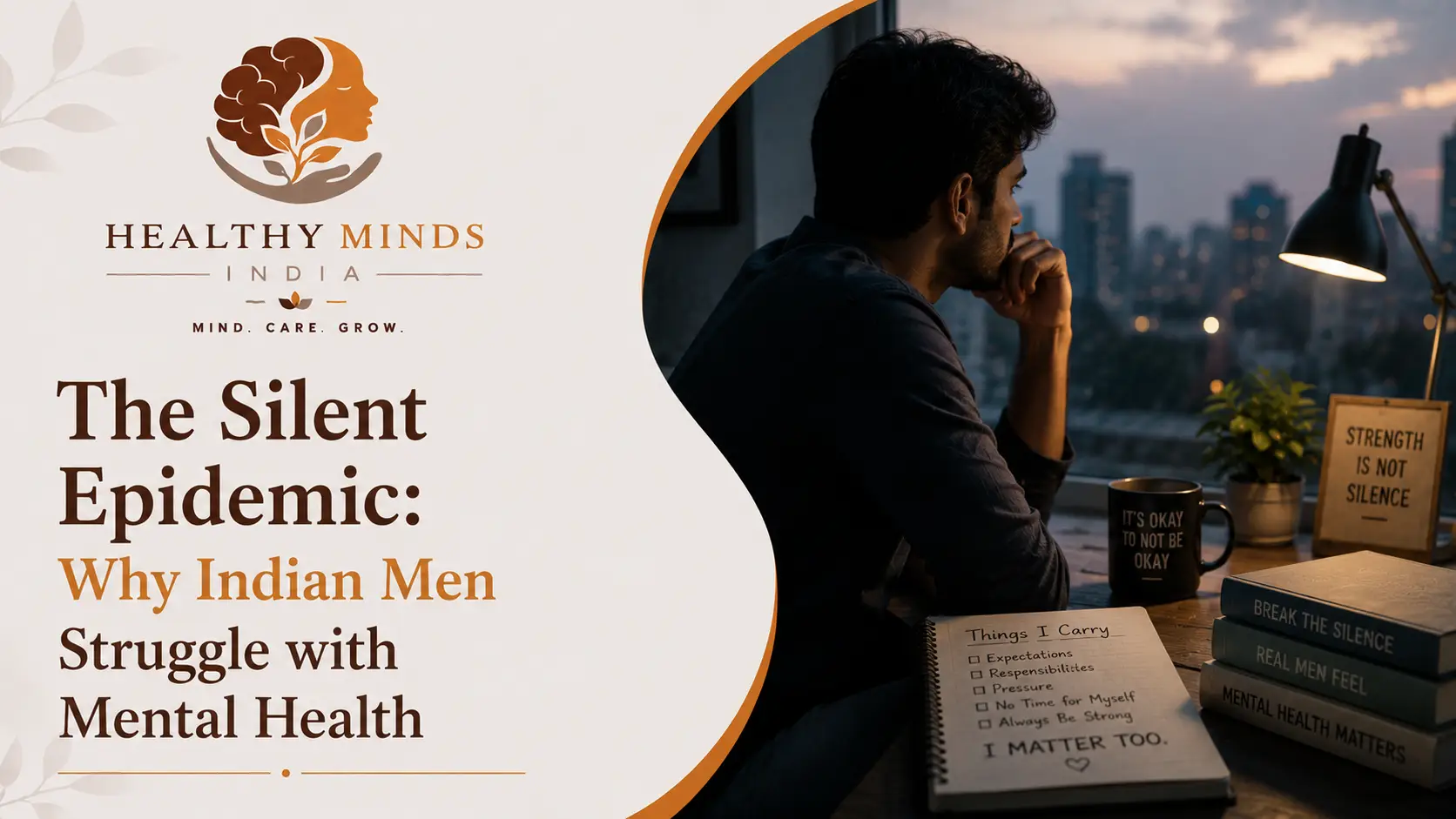
Discover why Indian men struggle with mental health in silence. Explore societal pressures, stigma, and actionable solutions to promote emotional well-being. Learn how Healthy Minds India can help men overcome challenges with compassion and expertise in Patna.
In this article 15
- 1. The Gendered Lens on Mental Health
- The Burden of Masculinity
- 2. Barriers to Mental Health Support
- A Complex Web of Stigma
- Economic and Systemic Challenges
- 3. The Consequences of Silence
- 4. Reframing Masculinity: A New Approach
- Strength in Vulnerability
- Community-Centric Solutions
- 5. The Role of Technology
- Digital Mental Health Interventions
- 6. Practical Steps Forward
- For Men
- For Society
- A Call to Action
Vikram is a 34-year-old software engineer living in Bengaluru. On the surface, he has it all-a promising career, a supportive family, and financial stability. Yet, Vikram wakes up every morning with a sense of dread he can't explain. His appetite has diminished, he feels disconnected from his loved ones, and he’s unable to focus at work. But when his wife suggests seeing a counselor, he brushes it off, saying, “I’m just stressed . Men don’t need therapy.”
This is the reality for millions of men in India who battle mental health challenges in silence. Despite being disproportionately affected by issues like depression and suicide, men are less likely to seek help or even acknowledge their struggles. Let’s explore why this is the case and how we can create a more supportive environment for men to speak up and heal.
1. The Gendered Lens on Mental Health
The Burden of Masculinity
From a young age, boys in India are taught to embody strength, resilience, and stoicism. Phrases like “Mard ko dard nahi hota” (Men don’t feel pain) are ingrained into their psyche, creating an unhealthy ideal of masculinity that discourages emotional Vulnerability is seen as a weakness, leading many men to suppress their feelings rather than seeking help.
-
- Case in Point: Arun, a 50-year-old shopkeeper in Chennai, lost his business during the pandemic. Struggling with anxiety and sleepless nights, he turned to alcohol as a coping mechanism rather than seeking counseling. His fear of being labeled “weak” kept him from addressing the root of his problem.
2. Barriers to Mental Health Support
A Complex Web of Stigma
Stigma is one of the most significant barriers preventing men from accessing mental health care. This stigma operates on multiple levels:
-
- Social Stigma: Men fear judgment from their peers, who might ridicule them for needing help.
- Self-Stigma: Internalized beliefs like “I should be able to handle this on my own” exacerbate feelings of shame and isolation.
- Cultural Stigma: In many Indian communities, mental health issues are dismissed as spiritual problems or weaknesses, leading men to seek alternative remedies like astrology or religious interventions.
- Example: Rajat, a young man from Uttar Pradesh, suffered from severe depression after losing his job. Instead of visiting a psychiatrist, his family took him to a faith healer, delaying his recovery by years.
Economic and Systemic Challenges
For many men, especially in rural areas, mental health services are either inaccessible or unaffordable. The lack of male-friendly spaces in counseling centers and the predominantly clinical tone of therapy further alienate men.
- Numbers That Speak: India has fewer than one mental health professional for every 100,000 people, making timely intervention a luxury rather than a right.
3. The Consequences of Silence
The refusal to address mental health issues doesn’t just affect the individual; it ripples across families, workplaces, and society.
- Suicide Rates: Men account for more than 70% of suicides in India, with financial distress, unemployment, and relationship breakdowns being common triggers.
- Substance Abuse: Many men turn to alcohol or drugs as a coping mechanism, which often leads to dependency and worsens their condition.
- Broken Relationships: Emotional unavailability and untreated mental health issues often lead to strained relationships, leaving men further isolated.
4. Reframing Masculinity: A New Approach
Strength in Vulnerability
It’s time to redefine masculinity to include emotional awareness and self-care. Seeking help should be viewed as a courageous act rather than a sign of weakness. Campaigns like “It’s Okay to Talk” have already started challenging outdated stereotypes, but more grassroots efforts are needed.
-
- Inspiring Story: Abhishek, a marketing executive in Mumbai, joined a men’s group therapy session after battling depression for years. The experience not only helped him heal but also reshaped his understanding of what it means to be a “strong” man.
Community-Centric Solutions
Men are often more comfortable in informal, activity-based settings than in traditional therapy rooms. Initiatives like group discussions in gyms, sports clubs, or even chai stalls can encourage men to open up in non-threatening environments.
-
- The Men’s Shed Model: Borrowing from Australia’s “Men’s Shed” initiative, India could adopt similar community spaces where men engage in activities like carpentry or gardening while discussing their struggles in a safe, judgment-free zone.
5. The Role of Technology
Digital Mental Health Interventions
With smartphone penetration increasing, teletherapy and mental health apps offer a promising solution, especially for men hesitant about face-to-face counseling.
-
- Success Story: Vivek, a 26-year-old from Pune, found solace in an anonymous chat-based therapy app. It provided him with the privacy he needed to share his feelings without the fear of being judged.
6. Practical Steps Forward
-
For Men
- Acknowledge the Issue: Recognize that mental health is as important as physical health.
- Break the Silence: Talk to someone you trust-whether it’s a friend, family member, or counselor.
- Educate Yourself: Learn about mental health conditions and their impact on overall well-being.
-
For Society
- Challenge Stereotypes: Call out toxic masculinity in everyday conversations, media, and workplaces.
- Promote Awareness: Use platforms like schools, workplaces, and social media to spread mental health literacy.
- Improve Accessibility: Advocate for more affordable and accessible mental health services tailored to men’s needs.
A Call to Action
Let’s imagine a future where men like Vikram, Arun, and Rajat feel no shame in admitting their struggles. A future where vulnerability is celebrated, not scorned. Achieving this will require collective effort-from individuals, families, communities, and policymakers.
Remember, mental health is not a gendered issue; it’s a human one. If you’re struggling, take that first step today. Speak up. Reach out. Because every conversation has the power to heal.
TAGS: Indian men mental health, Mental health stigma, Masculinity and mental health, Emotional well-being for men, Depression in men, Suicide prevention in India, Stress and mental health, Breaking toxic masculinity, Mental health solutions for Men, Healthy Minds India Patna
Disclaimer: All characters and events depicted in this blog are entirely fictional. Any resemblance to actual persons, living or dead, is purely coincidental. The content is intended for informational purposes only and should not be considered as medical advice. Always consult a qualified healthcare professional for medical concerns.
Medically reviewed by Dr. Saurabh Kumar, Consultant Neuropsychiatrist, Healthy Minds India, Patna. This article is for general education and is not a substitute for a personal consultation. To discuss your situation, book an appointment or contact the clinic.
Disclaimer: all characters and events depicted in this blog are entirely fictional. Any resemblance to actual persons, living or dead, is purely coincidental. The content is intended for informational purposes only and should not be considered medical advice. Always consult a qualified healthcare professional for medical concerns.